 thisisudaykant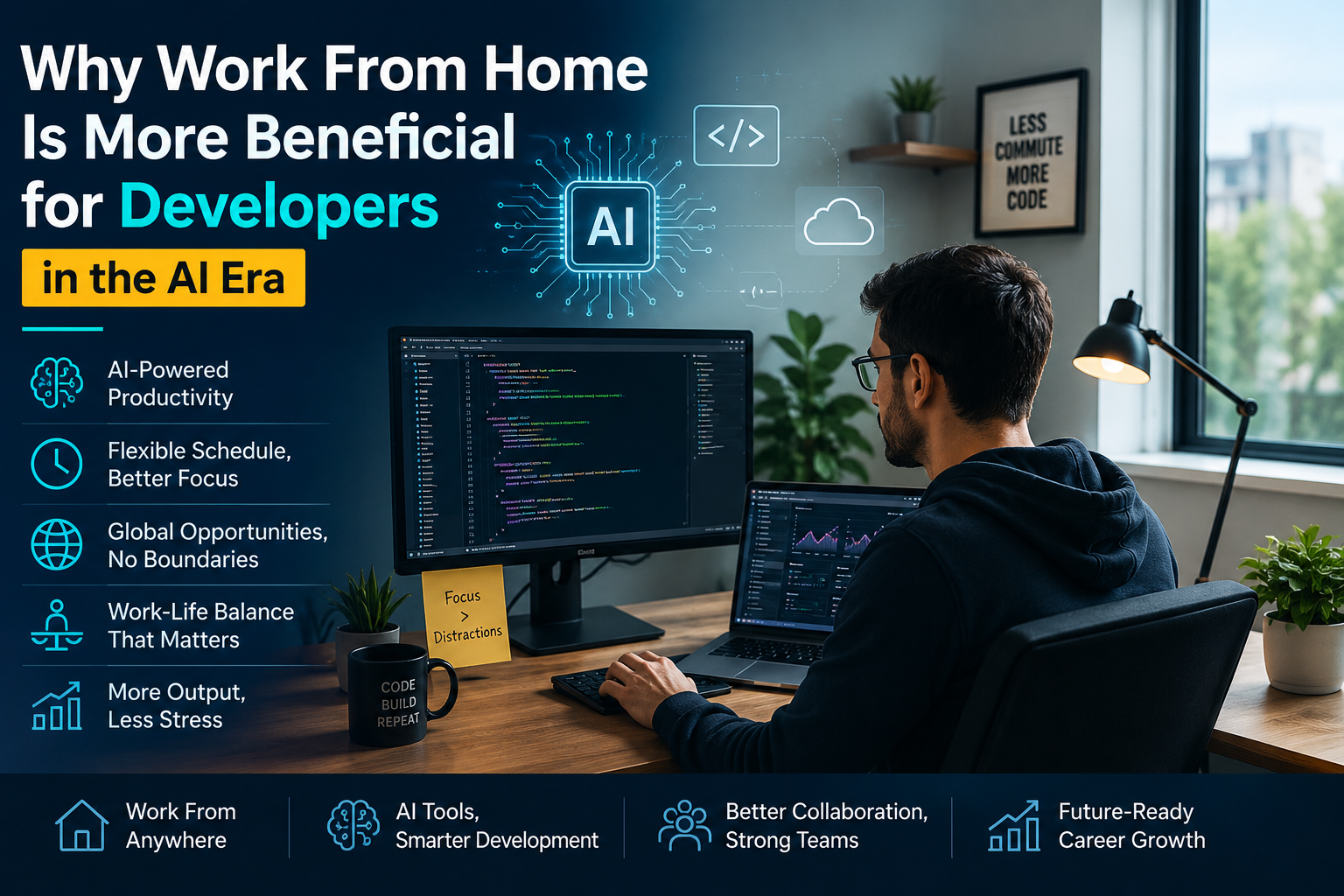
How Remote Work, AI Tools, and Flexible Schedules Are Transforming Software Development
The software development industry has undergone a significant transformation over the last few years. With the rise of Artificial Intelligence (AI), cloud-based collaboration tools, and remote-first work environments, developers are no longer tied to traditional office spaces. Today, many organizations and freelancers are discovering that working from home can be more productive, efficient, and rewarding than working in a physical office.
The Evolution of Modern Development
Software development has always been a profession that relies heavily on concentration, creativity, and problem-solving. In the past, companies believed developers needed to work from a central office to collaborate effectively. However, advancements in communication platforms, version control systems, cloud computing, and AI-powered development tools have changed that perspective.
Developers can now write, test, deploy, and manage applications from virtually anywhere in the world while maintaining seamless communication with clients and team members.
AI Has Reduced the Need for Physical Presence
The AI revolution has significantly improved the way developers work. Modern AI tools can assist with:
- Code generation and optimization
- Bug detection and troubleshooting
- Documentation creation
- Automated testing
- Project planning and task management
- Learning new technologies faster
With these capabilities available online, developers no longer need to sit beside colleagues to solve technical challenges. AI-powered assistants provide instant support, allowing developers to remain productive regardless of their location.
Better Focus and Fewer Interruptions
One of the biggest advantages of working from home is the ability to create a distraction-free environment.
In traditional office settings, developers often face interruptions such as:
- Unplanned meetings
- Office conversations
- Frequent desk visits
- Workplace noise
Software development requires deep focus and uninterrupted thinking. Working remotely allows developers to structure their environment for maximum concentration, leading to higher-quality code and faster project completion.
Increased Productivity Through Flexible Schedules
Every developer has different peak productivity hours. Some perform best early in the morning, while others are most creative late at night.
Remote work provides the flexibility to:
- Work during peak productivity hours
- Take breaks when needed
- Balance personal and professional responsibilities
- Avoid unnecessary commuting time
Instead of spending hours traveling to and from an office, developers can invest that time in learning new technologies, improving skills, or completing project tasks more efficiently.
Access to Global Opportunities
Remote work has removed geographical barriers for developers.
Today, a developer in India, Nepal, or any other country can work directly with clients and companies across:
- Australia
- United States
- United Kingdom
- Canada
- Europe
- Middle East
This global accessibility allows skilled developers to earn competitive incomes while working from the comfort of their homes.
Cost Savings for Developers and Companies
Working from home benefits both employees and employers financially.
For Developers:
- Reduced transportation expenses
- Lower food and daily commuting costs
- Less spending on professional attire
- More time available for personal development
For Companies:
- Reduced office rental expenses
- Lower utility and infrastructure costs
- Access to a larger talent pool worldwide
- Increased employee satisfaction and retention
Improved Work-Life Balance
A healthy work-life balance is essential for long-term success in software development.
Remote work allows developers to:
- Spend more time with family
- Pursue personal interests
- Maintain healthier routines
- Reduce commuting-related stress
When developers are happier and less stressed, they tend to produce better work and remain motivated for longer periods.
Remote Collaboration Is Better Than Ever
Modern tools have made remote teamwork highly effective.
Popular platforms enable:
- Real-time communication
- Screen sharing
- Project management
- Cloud-based development
- Continuous integration and deployment
Teams can collaborate efficiently regardless of their physical locations, making office attendance less necessary for most development tasks.
The Future of Development Is Remote and AI-Driven
As AI continues to evolve, developers will spend less time on repetitive coding tasks and more time on innovation, architecture, problem-solving, and business strategy.
The combination of:
- AI-powered development tools
- Cloud infrastructure
- Remote collaboration platforms
- Global talent networks
is creating a future where location matters less than skills and results.
Conclusion
The rise of AI has strengthened the advantages of remote work for developers. Working from home provides greater flexibility, improved focus, access to global opportunities, better work-life balance, and increased productivity. While office environments may still be beneficial for certain teams and projects, the modern software developer can achieve exceptional results without being physically present in an office.
In the AI era, success is no longer determined by where developers work, but by how effectively they leverage technology, creativity, and continuous learning to deliver value.